Showing posts with label Saints/Nada Yoga. Show all posts
Showing posts with label Saints/Nada Yoga. Show all posts
Tuesday, December 27, 2022


Monday, November 7, 2022
Saraswathi Stotram For A New Life
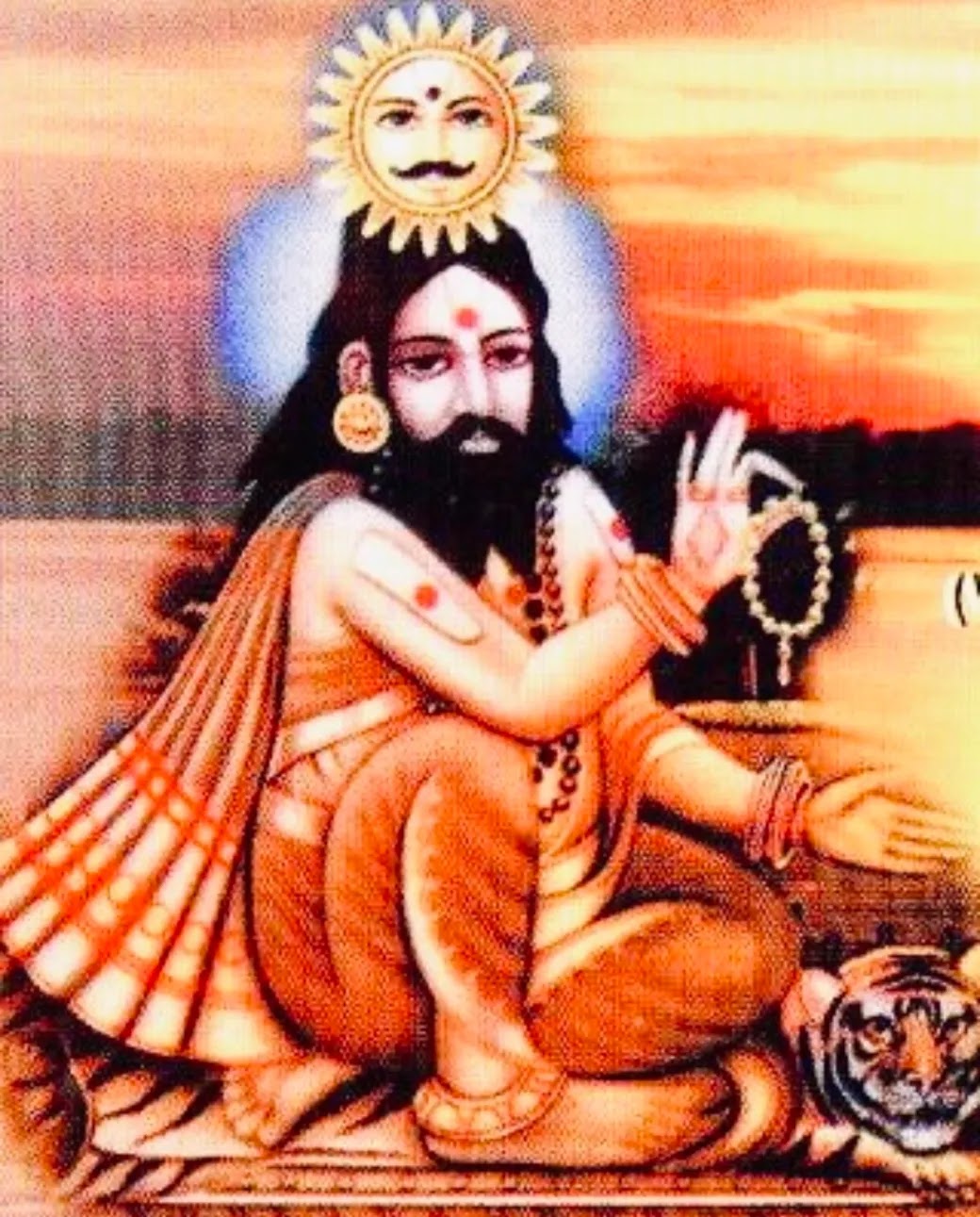
MAHARSHI YAGNAVALKYA
Yagnavalkya Maharshi's Saraswathi Stotram is a great boon for academic/art/music aspirants. The great sage in His Yagnavalkya Smrithi has stated as follows-" VEENAA VAADANA THATHVAGNYAHA SHRUTHI JAATHI VISHAARADAHA, THAALAGNYASHCHAAPRAYAASENA MOKSHA MAARGAM NIYACCHATHI." The sloka outwardly states that 'the one who is proficient in Veena, has sound knowledge of rhythm (thala) and shruthis (subtle quartertones/microtones) effortlessly attains liberation.' The great sage actually would have hinted at the science behind such expertise- of the union of breath (prana) of the player and the resonance (nada) of Veena which leads to self-knowledge.The Saraswathi Stotram was composed by Maharshi Yagnavalkya by the Grace of Sun God. This Stotram is mostly meant for people who have discontinued their academic/art pursuits due to the inexplicable ways of destiny. Whether it's a vocalist with a golden voice waking up one fine morning to find his/her voice gone, an instrumentalist whose hands have suddenly lost their magic or a brilliant student who has lost the power of concentration.
Chanting of Yagnavalkya's Saraswathi Stotram grants a fresh lease of life to unfortunate academic and artistic aspirants by reviving and enhancing their skills.
The Stotram's phala-sruthi states that even a foolish person becomes wise and intelligent by chanting this stotram without break for one year.
YAGNAVALKYA MAHARSHI'S SARASWATHI STOTRAM-
1. NARAYANA UVAACHA-
VAAGDEVATHAAYAAHA STHAVANAM SHROOYATHAAMSARVAKAAMADAM
MAHAAMUNIRYAAGNAVALKYO YENA THUSHTAAVA THAAM PURAA.
2. GURUSHAAPAACCHA SA MUNIRHATHAVIDYO BABHOOVAHA
THADAA JAGAAMA DUHKHAARTHO RAVISSTHAANAM CHA PUNYADAM.
3. SAMPRAAPYA THAPASAA SOORYAM KONAARKEY DRUSHTIGOCHAREY
THUSHTAAVA SOORYAM SHOKEYNA RURODA SA PUNAHPUNAHA.
4. SOORYASTHAM PAATAYAAMAASA VEDAVEDAANGAMEESHVARAHA
UVAACHA STHUHI VAAGDEYVEEM BHAKTHAACHA SMRUTHIHEYTHAVEY.
5. THAMITHYUKTHVAA DEENANAATHO HYAANTHARDDAANAM JAGAAMA SAHA
MUNIHI SNAATHVAA CHA THUSHTAAVA BHAKTHINAMRAATHMAKANDHARAHA.
6. YAAGNAVALKYA UVAACHA-
KRUPAA KURU JAGANMAATHARMAAMEYVAM HATHATHEYJASAM
GURUSHAAPATHSMRUTHIBBRASHTAM VIDYAAHEENAM CHA DUHKHITHAM.
7. GNAANAM DEYHI SMRUTHIM DEYHI VIDYAAM VIDYAADHIDEYVATHEY
PRATHISHTAAM KAVITHAAM DEYHI SHAKTHIM SISHYA PRABODHIKAAM.
8. GRANTHA-NIRMITHI-SHAKTHIMCHA SUSISHYAM SUPRATHISTITHAM
PRATHIBHAAM SATHSABHAAYAAM CHA VICHAARAKSHAMATHAAM SHUBHAAM.
9. LUPTHAM SARVAM DEIVAVASHAANNAVIBHOOTHAM PUNAH KURU
YATHAAMKURAM BHASMANI CHA KAROTHI DEVATHAA PUNAHA.
10. BRAHMASWAROOPA PARAMAA JYOTHIROOPAA SANAATHANEE
SARVAVIDYAADHIDEVEE YAA THASYAI VAANYAI NAMO NAMAHA.
11. YAYAA VINAA JAGATH SARVAM SHASHVATHJEEVANMRUTHAM SADAA
GNAANAADHIDEVEE YAA THASYAI SARASWATHYAI NAMO NAMAHA.
12. YAYAA VINAA JAGATH SARVAM MOOKAMUNMATTHAVATHSADAA
VAAGADHISHTAATHRUDEVEE YAA THASYAI VAANYAI NAMO NAMAHA.
13. HIMACHANDANAKUNDENDUKUMUDAAMBHOJASAMNIBHAA
VARNAADHIDEVEE YAA THASYAI CHAAKSHARAAYAI NAMO NAMAHA.
14. VISARGA BINDUMAATHRAANAAM YADADHISHTAANAMEYVA CHA
ITHTHAM THVAM GEEYASEY SADBHIRBHAARATHYAI THEY NAMO NAMAHA.
15. YAYAA VINAATHRA SANKHYAATHAA SANKHYAAM KARTHUM NA SHAKYATHEY
KAALA SANKHYAASWAROOPAA YAA THASYAI DEVYAI NAMO NAMAHA.
16. VYAAKHYAASWAROOPAA YAA DEVEE VYAAKHYAADHISHTAATHRUDEVATHAA
BHRAMASIDDHAANTHAROOPAA YAA THASYAI DEVYAI NAMO NAMAHA.
17. SMRUTHISHAKTHIRGNAANASHAKTHIRBUDDHISHAKTHISWAROOPINI
PRATHIBHAA KALPANAA SHAKTHIRYAACHA THASYAI NAMO NAMAHA.
18. SANATHKUMAARO BRAHMAANAM GNAANAM PRAPACCHA YATHRA VAI
BABHOOVA JADAVATH SOPI SIDDHAANTHAM KARTHUMAKSHAMAHA.
19. THADAA JAGAAMA BHAGAVAANAATHMAA SHREE KRISHNA EESHWARAHA
UVAACHA SA CHA THAM STHOUHI VAANEEMISHTAAM PRAJAAPATHEY.
20. SA CHA THUSHTAAVA THVAAM BRAHMAA CHAAGNYAYAA PARAMAATHMANAHA
CHAKAARA THVATHPRASAADEYNA THADAA SIDDHAANTHAMUTTHAMAM.
21. YADAAPYANANTHAM PRAPACCHA GNAANAMEYKAM VASUNDHARAA
BABHOOVA MOOKAVATH SOPI SIDDHAANTHAM KARTHUMAKSHAMAHA.
22. THADAA THVAAM CHA SA THUSHTAAVA SANTHRASTHAHA KASHYAPAAGNYAYAA
THATHASHCHAKAARA SIDDHAANTHAM NIRMALAM BHRAMABHANJANAM.
23. VYAASAHA PURAANASOOTHRAM CHA PAPRUCCHA VAALMIKIM YADAA
MOUNEEBHOOTHAHA SA SASMAARA THVAAMEYVA JAGADAMBIKAAM.
24. THADAA CHAKAARA SIDDHAANTHAM THVADVAREYNA MUNEESHWARAHA
SAMPRAAPYA NIRMALAM GNAANAM PRAMAADADHWAMSAKAARANAM.
25. PURAANA SOOTHRAM SHRUTHVAA SA VYAASAHA KRISHNAKALODBHAVAHA
THVAAM SISHEYVEY CHA DADHYOU THAM SHATHAVARSHAM CHA PUSHKAREY.
26. THADAA THVATTHO VARAM PRAAPYA SATH KAVEENDRO BABHOOVAHA
THADAA VEDAVIBHAAGAM CHA PURAANAANI CHA CHAKAARA SAHA.
27. YADAA MAHENDREY PRAPACCHA THATHVAGNAANAM SADAASHIVAM
KSHANAM THVAAMEYVA SANCHINTHYA THASYAI DADHOU VIBHUHU.
28. PRAPACCHA SHABDASHAASTHRAM CHA MAHEYNDRASHCHA BRUHASPATHIM
DIVYAM VARSHASAHASRAM CHA SA THVAAM DADHYOU CHA PUSHKAREY.
29. THADAA THVATTHO VARAM PRAAPYA DIVYAVARSHASAHASRAKAM
UVAACHA SHABDASHAASTHRAM CHA THADARTHAM CHA SUREYSHVARAM.
30. ADHYAAPITHAASHCHA YAIHI SISHYAAHA YAIRADHEETHAM MUNEESHVARAIHI
THEY CHA THVAAM PARISANCHINTHYA PRAVARTHANTHEY SUREYSHVARIM.
31. THVAM SAMSTHUTHAA POOJITHAA CHA MUNEENDRAIRMANUMAANAVAIHI
DAITHREYNDRAISHCHA SURAISHCHAAPI BRAHMAVISHNUSHIVAADIBHIHI.
32. JADEEBHOOTHAHA SAHASRAASYAHA PANCHAVAKTHRASHCHATHURMUKHAHA
YAAM STHOTHUM KIMAHAM STHOUMI THAAMEYKAASYENA MAANAVAHA
33. ITHYUKTHVAA YAAGNYAVALKYASHCHA BHAKTHINAMRAATHMAKANDHARAHA
PRANANAAMA NIRAAHAARO RURODA CHA MUHURMUHUHU.
34. THADAA JYOTHIHI SWAROOPAA SAA THEYNA DRUSHTAAPYUVAACHA THAM
SUKAVEENDRO BHAVEYTHYUKTHVAA VAIKUNTHAM CHA JAGAAMA HA.
35. YAAGNYAVALKYAKRUTHAM VAANEESTHOTHRAMEYTHATTHU YAHA PATEYTH
SA KAVEENDRO MAHAAVAAGMEE BRUHASPATHISAMO BHAVEYTH.
36. MAHAAMOORKHASHCHA DURMEYDHAA VARSHAMEYKA YADAA PATEYTH
SA PANDITHSHCHA MEYDHAAVEE SUKAVISHCHA BHAVEYD DHRUVAM.
(ITHI SHREE BRAHMAVAIVARTHATHEY MAHAAPURAANEY PRAKRUTHIKHANDEY NAARADANAARAAYANASAMVAADEY YAAGNYAVALKYOTHA VAANEE STHAVANAM NAAMA PANCHAMODHYAAHA.
ITHI SHRIMAD DEVEE BHAAGAVATHEY MAHAAPURAANEY NAVAMASKANDHEY YAAGNYAVALKYAKRUTHAM SARASWATHEESTHOTHRAVARNANAM NAAMA PANCHAMODHYAAYAHA.)
Saturday, January 28, 2012
Hazrat Inayat Khan ( The Hindu dated 29/01/012)
 Hazrat Inayat Khan
February 5 marks the Urs (death anniversary) of Sufi teacher Hazrat Inayat Khan that will be held at his mausoleum in Delhi. As a part of this event, special Sufi trails are being organised by international tour operators for followers of this Indian mystic who took Sufism to the West.
Abu Hashim Madani's dargah in Purana Pul and Aastan-e-Kaleemi in Tolichowki (both in old Hyderabad) — mausoleums of the great teachers of Hazrat Inayat Khan feature prominently on the list.
It was in Hyderabad that the musician became a spiritual guru. His grandson Zia Inayat Khan, in his work A Pearl in Wine: Essays on the Life, Music and Sufism of Hazrat Inayat Khan, chronicles Hazrat Inayat Khan's stay in the city.
A noted veena artiste and composer, Hazrat Inayat Khan was patronised by the sixth Nizam Mehboob Ali Pasha. He received rave reviews from officials in the royal court and the lofty title of ‘Tansen al Zaman' from the Nizam himself. During his stay in Hyderabad, he penned Minar -i-Musiqar — a treatise on music and had plans to open his own music school on the lines of the Gayanshala in Baroda started by his maternal grandfather Mawlabakhsh, a maestro in Hindustani and Carnatic music traditions alike.
Many would not know that Noor Inayat Khan, the World War II hero executed by the Germans in the Dachau Concentration Camp, was the daughter of Hazrat Inayat Khan and Ora Ray Baker.
Life changing meeting
A chance meeting with his spiritual teachers, Abu Hashim Madani and Syed Mohammed Hasan Jeeli Kaleemi, the latter a Sufi master in the then Tolichowki village, changed his life though.
“Madani was a follower of my grandfather as was Hazrat Inayat Khan. Inayat Khan delved into Sufism during his stay in Hyderabad,” said Syed Mohd. Rasheed-ul Hasan Jeeli Kaleemi, popularly known as Pir Rasheed — the only living descendant of the Chishti order founded by his grandfather Syed Mohammad Hasan Jeeli Kaleemi.
“Hazrat Inayat Khan travelled extensively. He held summer school on Sufism in Suresnes, France and went to Russia and England. The Sufi order founded by him there is now called the Sufi Order International, headquartered in the U.S. He returned to India in 1927 and died after a brief illness. His body was laid to rest near the dargah of Nizamuddin Auliya. His son Vilayat Inayat Khan was my father Syed Mohd. Fakhrul Hasan Jeeli Kaleemi's disciple,” recollected Pir Rasheed, as he got ready to leave for Hazrat Inayat Khan's Urs.
Today Hope Project, started by Vilayat Inayat Khan, takes up community health, livelihood and education-related works in the slums near Hazrat Nizamuddin dargah keeping Hazrat Inayat Khan's Sufi philosophy as a guiding principle.
But sadly for the city that saw Inayat Khan's transformation from a musician into a mystic and then a mureed or disciple, his teacher Madani's tomb in the old city lies in a decrepit condition with the history unheard of by many in its vicinity.
Wednesday, October 21, 2009
Sant Kabir's message through my father's music!
 'Shabda is the power of the Supreme Being that has created even the Creator of the three worlds. The world of illusory manifest-ation came into being from the power of Shabda, the Divine Word, and it is sustained by it. The Lord pervades the entire creation in the form of Shabda.
True secret of Shabda is known only to the perfect Masters and it can be experienced by their Grace (Gurukripa), neither to be expounded nor to be analysed. This is one of the most important reasons why musicians have to religiously render the compositions of the "Mummoorthi Composers" for attaining the Grace of these saint composers.
Saint Kabir distinguishes the divine word or Shabda from the words that can be spoken, written or read.
Saint Kabir distinguishes the divine word or Shabda from the words that can be spoken, written or read.
This is the distinction between "Dhunyathmika Shabda" and "Varnathmika Shabda". The latter originates from the former. Spoken language originates from pure, unarticulated sound. This is the Shabda Kabir refers to. The mantra leads to that pure Shabda, that has the nature of Space. That is why it is also called the "Chidaakaasha Vani", the song of the Space of Consciousness.
True detachment and desirelessness come as a natural result of the practice of Sound/Shabda. Therefore it is useless to pursue austerities as an end in themselves.
When the aspirant goes within and contacts the Shabda, he naturally develops "premabhakthi" or love for God.
Kabir says: Apply yourself, my friend, to the pracitce of Shabda. The Shabda from which even the Creator came into being. Imprint Shabda in your heart, O friend! The vedas and the scriptures extol the merits of Shabda. The Shabda that sustains all shabdas in the world (that is: the primordial Shabda).Men, sages and God sing its praises yet they do not fully know its mystery. Shabda is the Master, listening to the Shabda one becomes the disciple.(The Shabda that Kabir refers to cannot be repeated, it can only be heard and listened to. By attending to that Shabda which rsides in the heart region, one naturally attunes to the Shabda to attain liberation.)
Kabir further states that people who repeat mantras mechanically do not enter the door of the Shabda that is behind every mantra. There is a difference between external repitition of the name (mantra) and internal listening of the True Word or Shabda which is primordial (inarticulated).Kabir reaffirms in His Sant kabir Ki Shabdavali that a person's life, achievements and material possessions are wasted if he is unable to taste the True Word or Shabda.He also states that between Shabda and Shabda there is a vast difference.He instructs,"Churn the Primal Shabda and realise the truth, O Friend!"
The Kabir Bhajans which my father, film music director, late Sri. G. Aswathama had composed for "Bhakta Ramadasu" (1964,Telugu) were sung by the legendary singer, Mohammed Rafi. Each bhajan had been composed soulfully by my father and sung soulfully by Mohd. Rafi Saab.After recording these numbers for my father, Sri.Rafi had given the title of "Naushad of the South" to my father. In this movie Sri. Chittoor Nagaiah Garu had tuned all the Ramadasu Krithis and also acted as Bhakta Ramadasu, the bhajans were composed by my father. These songs move me to tears out of missing my father, as I can touch my father's soul through these songs! I have provided links for my father's compositions sung by Mohd. Rafi for Bhakta Ramadasu below:-
The music direction for all Kabir Bhajans in the film is by my father, Sri.G.Aswathama and not Sri.Chittoor V.Nagaiah ( composer of only Ramadasu Krithis and enacting the role of Bhakta Ramadasu in the film) as wrongly mentioned in musicindiaonline.
Tuesday, June 30, 2009
Quan Yin/Nada Yoga
 Legend says Quan Yin,originally a princess, having forsaken marriage,lived her life in a conventmuch to her father's anger and distrust.She was a Buddhist Bodhisattwa ( a mortal who has achieved enlightenment and earned the right to enter Heaven or Nirvana), and when at the gates of Heaven,She heard someone on Earth cry, and so turned back,vowing that she would stay on Earth to do all she could to ease our suffering.She would not enter heaven until everyone could go there with Her.She was known as the goddess of Compassion and Mercy.
There are many ways to invoke Goddess Quan Yin into one's life.The traditional mantra of OM MANI PADME HUM is one of the many approaches.One need not be a buddhist to invoke Her into his/her life.It is said to have a Quan Yin picture or statue in one's house brings good luck and protection to the household and family.
Master Ching Hai initiates sincere people longing to know the Truth,into the Quan Yin method.Master Ching Hai was born to well-off family in Aulac,the daughter of a highly reputed naturopath.She was brought up as Catholic, and learned the basics of Buddhism from Her grandmother.As a youg child she showed a precocious interest in philosophical and religious teachings, as well as uncommonly compassionate attitude towards all living beings.
As She grew,She travelled around many countries,searching for the perfect method of enlightment.Through many years of tests and tribulations,master Ching Hai finally found the Quan Yin method and the Divine Transmission in the Himalayas.After a period of diligent practice,during Her retreat in Himalayas,She attained complete enlightenment.
THE QUAN YIN METHOD:-The chinese characters mean contempaltion of the Light and Sound within oneself.These inner experiences have been repeatedly described in the spiritual literature of all the world's religions since ancient times.
INNER SOUND:-The primal vibration or Sound is in its nature transcendental and therefore perceived in silence.Jesus's disciples call it the "Holy Spirit"or the "Word"(which is from the Greek word "Logos"meaning Sound).In the beginning was the Word,and the Word was with God,and the Word was God.After Shakyamuni Buddha attained enlightenment,He spoke of this Sound too,calling it the "drum of immortality".Krishna equated Himself with Sound in Ether.Mohammed perceived this Sound in the cave at Gare-Hira when He had a vision of the archangel Gabriel, and Lao Tzu described the Tao as the "Great Tone".
Daily practice of the Quan Yin Method of meditation and keeping of the Five Percepts are most essential.
Excerpts from The Heart of the Goddess,Hallie Inglehart Austin:-
"QUAN YIN MEDITATION:-Sit in a comfortable position and close your eyes.Allow your breathing to deepen and your mind and body to relax.Imagine that it is nighttime and you are on top of a hill looking out over the ocean.The full moon has just risen and the moonlight shimmers on the water.You gaze at the moon for a long time;the moonlight is powerful but soft,and looking at it makes you feel calm and happy.
The moon now begins to get brighter and brighter,so bright that you are barely able to look at it.
Gradually,it becomes Quan Yin Herself,Her whole body surrounded by a glowing aureole.She stands on a lotus that floats on the waves.At the sight of you she smiles beautifully,tears of mercy and compassion shine in Her eyes.Imagine Her radiance filling you,Her strength,Her peace,Her compassion becoming a part of you.If you repeat Her name,your mind will be calm,and She will stay with you.
Finally it is time for Her to leave and She becomes smaller and smaller.At last the sea and sky vanish too,and you rest in contemplation of the beautiful ,empty space that is left.Let yourself become space.When you are ready,come back into your body and slowly stretch.Open your eyes and look at the world around you."This method is said to invoke the Inner Music within oneself.Master hing Hai said"When artificial light and artificial music(here 'artificial' means material) could make people become so relaxed and so wise-could you imagine how much the real thing can help us in our wisdom?The real thing is beyond this world,but it is accessible to every man,should we want contact with it. This is the Inner heavenly Music and The Inner Heavenly Sound.And depending upon the intensity of this Music,we can push ourselves beyond this world,go into a deeper level of understanding.
The Sound is the kind of vibrational power that pushes us into the higher levels,but it does that without any noise,without much trouble and no cost and no discomfort to the "experiencer".That is the way to go into the beyond."
Apart from the meditation mentioned above,The Five Percepts of the Quan Yin Method are:-
1.Refrain from taking the life of sentient beings;
2.Refrain from speaking what is not true;
3.Refrain from taking what is not yours;
4.Refrain from sexual misconduct;
5.Refrain from using intoxicants.
The above percept requires strict adherence to a vegan or lacto-vegetarian diet.No meat,fish,poultry,eggs(fertilized or nonfertilized).
Master Ching Hai has stressed elaborately on the importance of a vegetarian diet for the immediate attainment of enlightenment through the Quan Yin Method.
(Photos:-on top left,Goddess of Compassion and Mercy,Quan Yin.On bottom right:-Master Chang Hai,follower of Quan Yin Method).
Sri Ramana Maharishi /Nada Yoga
 Arunachala Bhakta Bhagavat from "UNFORGETTABL-E DATES,"RAMANA MAHARISHI'S MIRACLES"(Mr.Bhaga-vat,New York)
"On the night of Wednesday,January 5th,1966,The Great Guru Ramana in His Infinite Mercy gave me formal initiation (in the dream) by placing his right hand on my head and instructing me to meditate on the heart by watching the breath and the sound.
Bhagavan Ramana appeared to me in a dream.He placed his right hand on my head and began to instruct me in Hindi,my mother tongue,in these words:-"Dekho Hridaya ke under se kahan se awaaz aatee hain.Jahan se awaaz aatee hain,usee par dhyaan rakho."(Watch wherefrom the sound emanates in the heart.Meditate on the centre wherefrom the sound emanates).This instruction of Bhagavan continues to reverberate in my heart even now.
The breath starts from the heart,abode of pranavayu.If we exhale and do not inhale immediately the need to take a new breath will start in the centre of the chest,rather down towards the solar plexus.That is the seat of the pranavayu.That is also the place of the "lower akasha",the space of the heart(upper akasha is in the head) ,where the vibration of the omkara dhwani,the Anahata nada,resonates.Mr.Bhagavata is instructed to contemplate on that sound and find its source (pure awareness)."
Sri Ramana Maharishi on Nada:-"He who meditates on it feels it.There are ten kinds of nada.After the final thundering nada,the man gets 'laya'.That is his natural and eternal state. Nada,Jyothi and enquiry(vichara) take one to the same point.
Meditation on nada is one of the several approved methods.The adherents claim a very special virtue for the method. According to them it is the easiest and the most direct method.Just as a child is lulled to sleep by lullabies,so nada soothes one to the state of samadhi.
Again just as a king sends his state musicians to welcome his son on his return from a long journey,so also nada nada takes the devotee into the Lord's abode in a pleasing manner.Nada helps concentration.
Nada-Upasana is good.It is better if it is associated with vichara.In that case the nada is made up of chinmaya(conciousness) and tanmaya(knowledge of self).
In the Tantras nada is said to be the subtle sound with tejas in it.(light-Heat).This light is said to be the body of Siva.When it develops and sound is submerged it becomes bindu.To be full of light (Tejomaya) is the aim. Kala is a part of the bindu."
Sri Ramana's advice is to associate nada-upasana with atma-vichara.While listening to the sound we should also be aware of its source:'Atman'.Sri Ramana Maharishi therefore recommends nada-upasana.
I find an inexplicable peace whenever I go to the ashram to stay there for 2 or 3 days,with my veena.To play my veena in the atmosphere purified,sanctified and electrified where He had walked,talked,withdrawn into Self,preached innumerable devotees,is a bliss that cannot be expressed in words.I had always wondered how lovely it would be to play the veena in the Skanda Ashramam where Bhagavan and His mother had stayed for a long time.But the climb to that spot is steep and I could never attempt climbing there with my veena.The other two places where I dream of playing veena is on the banks of Laka Manasarovar, and in the Sanctum Santorum of Lord Ranganatha's temple in Srirangam.I was told that women were not allowed to play inside the sanctum santorum of the Lord.A gentleman,named Sri Rangarajan is the blessed one to awaken the Lord with his veena playing everyday during Brahma muhurtham.He plays on a mini-sized veena.I had the oppurtunity to play on this,but found it difficult,because the frets are too small and minute.My dream to play the veena right in front of Kamakshi in Kanchipuram had been fulfilled.I was asked to sit in the narrow space in the cubicle where there is the dhwajasthambam ,bang opposite the Goddess.It was dark and hot.Nobody could see me,and the line of devotees moving below the place where I sat and played kept looking around for the source of the veena-nadam(there was mike system)!A few spotted me and were surprised and gathered around me.I was oblivious to everything except my great fortune to be able to look at Her directly while playing veena!
Subscribe to:
Posts (Atom)
FEATURED POST
KANYAKUMARI FOR SPINAL ALIGNMENT
GODDESS KANYAKUMARI The convergence of 3 oceans ( the Triveni Sangamam of Bay of...

-
 (YANTRA FOR SLOKA NO.1) SLOKA NO. 1:- "Shivah Shakthyaa Yuktho Yadi Bhavathi Shakthaha Prabhavithum Na Chedevam Devo Na Khalu Kushalah...
 -
 YANTRA FOR SLOKA NO.25 SLOKA NO.25:- "Thrayaanaam Devaanaam Thrigunajanithaanaam Thava Shive Bhavethpoojaa Poojaa Thava Charanayoryaa V...